
Maryland DOC Release Paths
The Maryland Division of Correction holds sentenced state prisoners. No Maryland state prison is identified inside Montgomery County, so a person convicted locally can serve the term elsewhere. State confinement may end through parole, mandatory or conditional release based on diminution credits, medical parole, sentence expiration, or discharge. Parole and mandatory release end confinement while legal supervision continues. A detainer or new commitment can instead cause another custody transfer.
The official federal facility directory offers a useful jurisdiction check when a record points away from Maryland state custody.
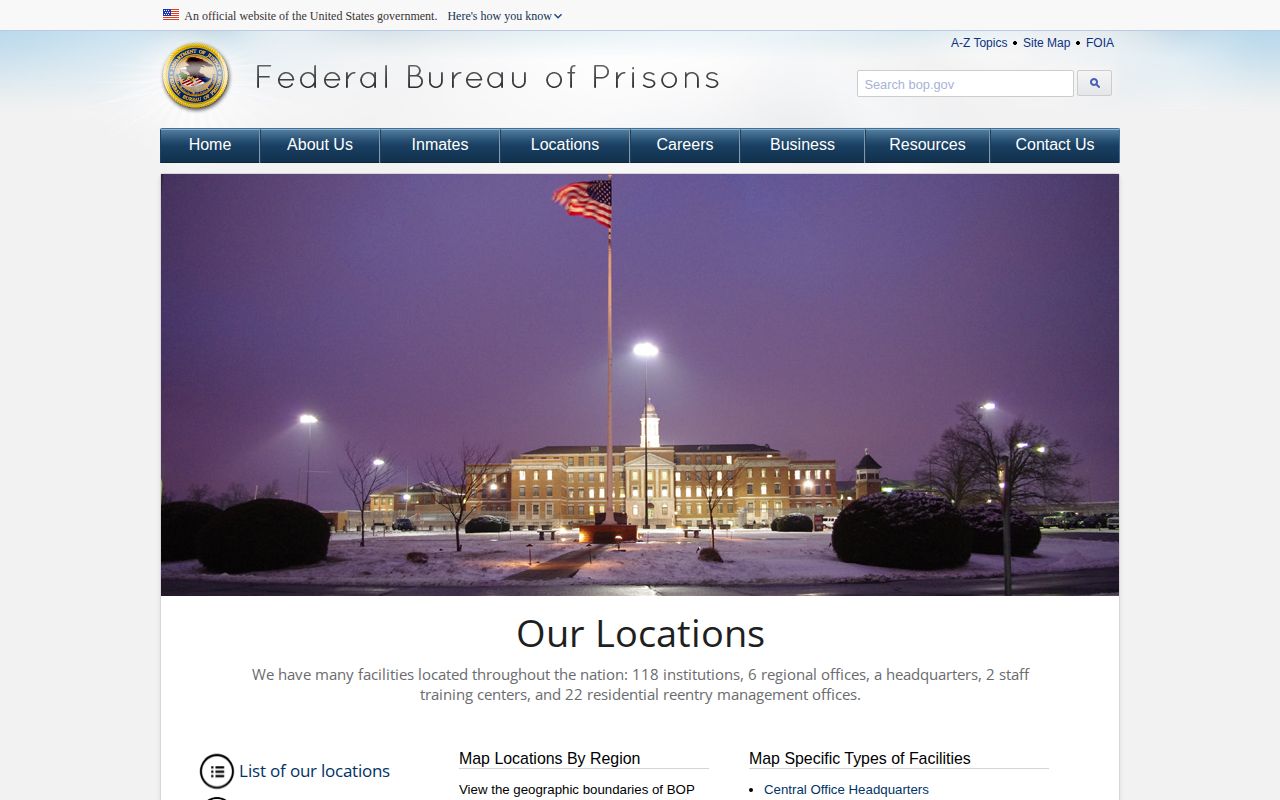
The directory is not a Maryland DOC locator. It helps rule the federal path in or out before a DPSCS records request is made.
A state release may be parole, mandatory supervision, medical parole, sentence expiration, or full discharge. These outcomes do not carry the same legal meaning. Parole and mandatory supervision allow community placement while the sentence and reporting duties continue. A transfer ends one institutional stay without ending state custody. Ask for the release type, effective date, supervision status, and destination rather than relying on a missing locator result.
Confirm a Maryland DOC Release
The official DPSCS Incarcerated Individual Locator is designed around current state incarceration. DPSCS expressly lists release and escape among reasons a person may be absent. It also warns that some people in custody may not appear. A no-result screen is inconclusive. Search the correct name and compare the DPSCS number, age information, and institution, then use state records for historical confirmation.
- Search the DPSCS locator using the committed name and compare the state identifier and institution.
- If no result appears, contact DPSCS Data Processing for a present-custody check.
- Search Maryland VINE for the state agency’s reported custody event.
- Read the Montgomery County sentencing docket and any Parole Commission action.
- Request the DPSCS commitment, computation, and release record for historical proof.
VINE is an event service, not a certified state release certificate. DPSCS records establish the institutional event, while court and parole records establish its legal basis.
Maryland DOC Sentence Records
DPSCS sentence computation uses the commitment, court-awarded credit, state diminution credits, disciplinary loss or restoration, parole actions, and detainers. Maryland does not support a universal percentage shortcut. A maximum expiration date, parole eligibility date, mandatory-release date, and actual release date answer different questions. The public locator was not verified to display a projected date for every record, so request the sentence calculation rather than inventing a field.
A favorable parole action or calculated mandatory date does not establish the instant of physical release. DPSCS must complete the state release event and check any other custody basis. Compare the release certificate or institutional record with the court sentence and the Parole Commission action. If supervision follows, retain the DPP reporting documents as a distinct record.
DOC Release Record Requests
Address a focused request to DPSCS, not Montgomery County DOCR. Identify the person, DPSCS number if known, sentencing case, institution, and time period. Ask for the commitment summary, release certificate, institutional movement, sentence or diminution-credit calculation, mandatory-release date, and parole information that can lawfully be disclosed. Request a plain-language explanation for internal codes.
The DPSCS Public Information Act page lists copies at $0.50 per page, another $0.50 per page for certified true copies, plus postage, with totals of $1 or less not charged. Ask for an estimate. The state request covers DPSCS records, not local detention or court files.
- Release authority
- The court, sentence event, or agency action that permits the custody episode to end.
- Detainer
- A request or legal basis for another authority to take or continue custody.
- Transfer
- A move to another custodian, not a return to the community.
Parole and Mandatory Supervision
The Maryland Parole Commission makes parole decisions. The Division of Parole and Probation handles field supervision. Mandatory release under Correctional Services §§7-501 and 7-502 can place a person in the community under parole-like conditions until full-term expiration. Describe that status as release from confinement on mandatory supervision, not sentence completion. The Commission record, DPP instructions, and release certificate establish the exact status.
DPSCS release logistics depend on the releasing state institution and the state release documents. The MCDC taxi and property rules do not apply to a Division of Correction release. A former state prisoner seeking a base or medical file should contact the releasing institution or Operations Case Management, while the state PIA coordinator handles broader records requests.
DOC Detainers and Transfers
Montgomery County Code §2-160 governs local cooperation with federal immigration enforcement. It describes an immigration detainer as a civil administrative request involving notice or continued custody, while the current code also sets specific rules and exceptions. A civil request is not automatically the same as a judicial warrant. Still, a person’s local custody event can end with notice to or pickup by another authority.
Ask DPSCS whether the state event was community release, parole, mandatory supervision, full discharge, or transfer. If an ICE or federal lead appears, query that receiving system. For a Montgomery County conviction, the state commitment record and county court docket can be read together, but the county jail line cannot certify what happened after transfer to state custody.
Maryland DOC Records Contact
DPSCS public-information requests go to the PIA Coordinator, Office of Constituent Services, 6776 Reisterstown Road, Suite 212, Baltimore, MD 21215, or dpscs.pia@maryland.gov. Former state prisoners seeking their own base or medical file may contact the releasing institution or Operations Case Management at 410-585-3300, subject to identification and authorization rules.
DPSCS Public Information Act Coordinator
Office of Constituent Services
6776 Reisterstown Road, Suite 212
Baltimore, MD 21215
Email: dpscs.pia@maryland.gov
Operations Case Management: 410-585-3300
When precision matters, pair the DOC answer with the Montgomery County released inmate search and records path. That process distinguishes a county release from state, federal, immigration, or community-corrections status.
Maryland DOC Release Calculations
State diminution credits are governed by Correctional Services Title 3, Subtitle 7. The calculation can include good-conduct, work-task, education, and special-project credits, plus any disciplinary loss or restoration. Court-awarded credit for time served also affects the term. Consecutive and concurrent sentences must be read correctly. A later sentence modification, appeal, parole action, or detainer can change the practical date.
Conditional release under §7-501 and legal custody under mandatory supervision in §7-502 do not create full discharge on the release day. Offense- and sentence-specific rules in §7-301 affect parole eligibility, including special treatment for certain violent offenses and life sentences. Maryland cannot be reduced to one “serve this percent” rule. Request the computation that applies to the actual conviction, sentence, and offense date.
When the public locator returns no match, DPSCS Data Processing can be used for a present-custody check at 410-585-3350, 410-585-3351, or 410-585-3352. Then request the historical commitment and release record. Search VINE for a reported state event and inspect the Parole Commission or DPP papers if supervision followed. The Montgomery County court docket can explain the original sentence but cannot replace the state computation.
DPSCS records requests follow Maryland PIA timing. A prompt decision is due no later than 30 days, and an agency expecting more than ten working days provides a time estimate, fee range, and reason for delay within ten working days. The DPSCS page lists ordinary copies at $0.50 per page and certified true copies at an added $0.50 per page, plus postage. Totals of $1 or less are not charged. Search and preparation charges may still matter, so ask for an estimate and electronic delivery.
Request scope matters. The DPSCS form covers state correctional records, not the Montgomery County detention record, police file, or court file. A former state prisoner seeking a personal base or medical file is routed to the releasing institution or Operations Case Management, subject to identity rules. Public requests should seek the specific commitment, computation, release, and status fields and allow the custodian to redact protected medical, victim, security, or investigatory material.
Maryland VINE can report a state custody change and support notifications. It is not the certified historical record and cannot establish all supervision terms. The Parole Commission’s decision, the institutional release certificate, DPP reporting papers, and the sentencing docket are separate documents. Reconcile them before deciding whether the person reached parole, mandatory supervision, or full discharge.
The state release certificate remains the controlling correctional event record.